
Title: Contrasting selective signatures of gene expression plasticity in response to antifungal clotrimazole and common environmental stresses in yeast
Yang Qian, Zhixuan Yao, Yu Yao, Ti Qin, Piaopiao Chen&Haoxuan Liu
Abstract
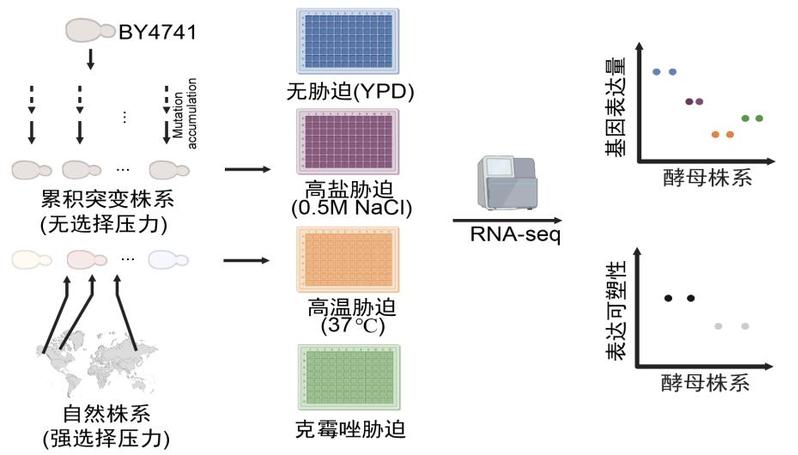
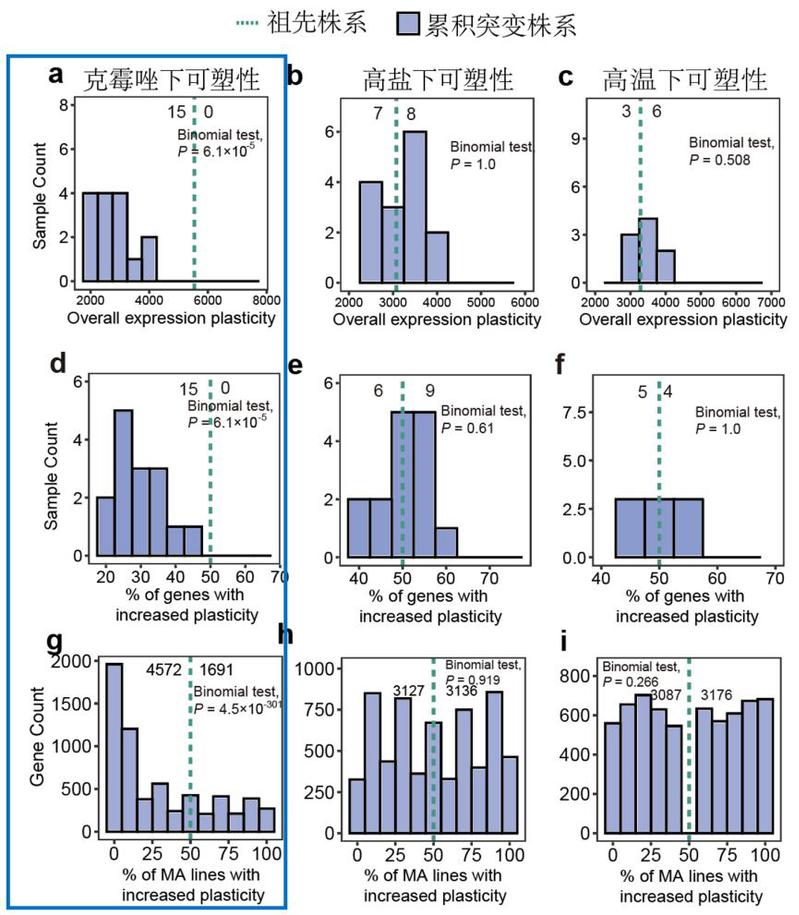
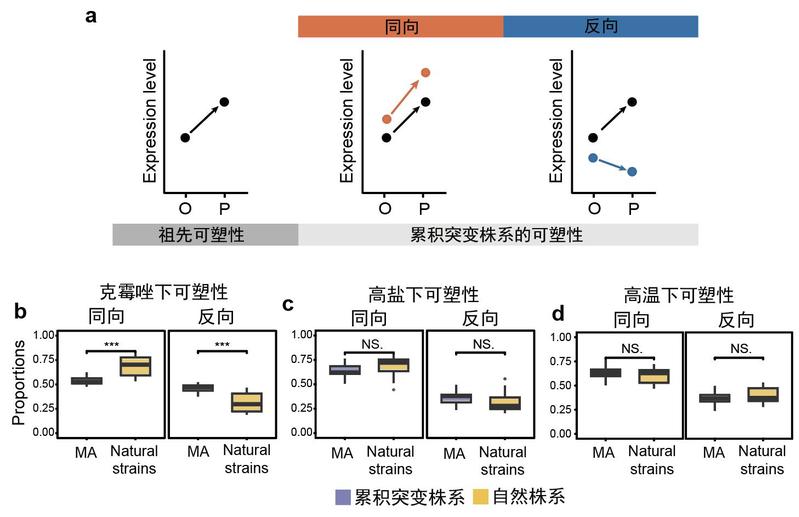
Phenotypic plasticity plays a key role in adaptation to fluctuating environments. However, its evolutionary significance remains debated, with conflicting views on whether it is actively maintained by natural selection or a neutral consequence of molecular constraints. In this study, we examine the evolutionary role of gene expression plasticity in yeast populations exposed to both common, ancestrally experienced stressors (NaCl and heat at 37 °C) and a novel stressor (the antifungal drug clotrimazole). Using mutation accumulation lines to separate the effects of natural selection from genetic drift, we compare gene expression responses (referred to as plastic change) between 22 natural strains, 15 mutation accumulation lines, and their progenitor under non-stressed and stressed conditions. Our results show that, in the antifungal environment, gene expression plasticity is selectively maintained, as indicated by its reduction in magnititude, reversal in directionality, and loss of stress-responsive pathways in mutation accumulation lines. In contrast, plasticity under the common stress conditions appears largely neutral, with random variation across mutation accumulation lines. This study provides direct evidence of the adaptive role of gene expression plasticity in response to novel stressors and offers insights into the molecular mechanisms driving these adaptive responses.
Link: https://www.nature.com/articles/s41467-026-71153-0