

Title: Improving low-phosphate tolerance via tissue-specific CRISPR/Cas9 knockout to balance growth and stress responses in rice
Guangbo Wei , Zhengwei Huang , Shuman Wang, Fangzhou Zheng , Jiakai Yao , Qiongli Jin , Youchao Zhang , Hongli Luo , Xinlian Zhang , Yichen He , Mingchuan Zhou , Mian Gu , Chuanzao Mao, Zhiye Wang
Abstract
Balancing growth and stress responses is critical for improving crop stress tolerance. Inorganic phosphate (Pi) deficiency reduces agricultural yields. Plants have evolved a Pi-starvation response (PSR) network that coordinates growth and responds to fluctuating environmental Pi levels. Null mutations or whole-plant knockdown of PSR repressor genes, such as PHOSPHATE2 (OsPHO2) and OsSPX (Syg1, Pho81, XPR1) family genes, enhance Pi absorption and transfer but disrupt Pi homeostasis, inhibiting growth and reducing yields. To overcome this, we developed a CRISPR/Cas9 tissue-specific knockout (TSKO) system for efficient, vascular-specific somatic knockout of OsPHO2 in rice (Oryza sativa) cv. "Nipponbare" across several generations. The plants showed moderately increased Pi concentrations, maintained Pi homeostasis in hydroponic culture, and increased effective tiller number and grain yield in a Pi-deficient paddy. Vascular-specific OsPHO2 knockout moderately increased OsPHO2-repressed, vascular-expressed, Pi-starvation-induced signaling in roots and alleviated disordered PSR in roots and leaves. Vascular-specific knockout of OsPHO2 or OsSPX1/2 in the Zhonghua 11 background gave similar results. Field trials confirmed the enhanced low-Pi tolerance of TSKO plants in a Pi-deficient paddy and these plants showed normal growth in a Pi-sufficient paddy. This highlights the utility of improving rice low-Pi tolerance via a tissue-specific CRISPR/Cas9 knockout, provides insights into the role of vascular tissues in PSR, and offers a promising spatial-targeting strategy for crop improvement.
Link: https://academic.oup.com/plcell/article/38/6/koag170/8704026
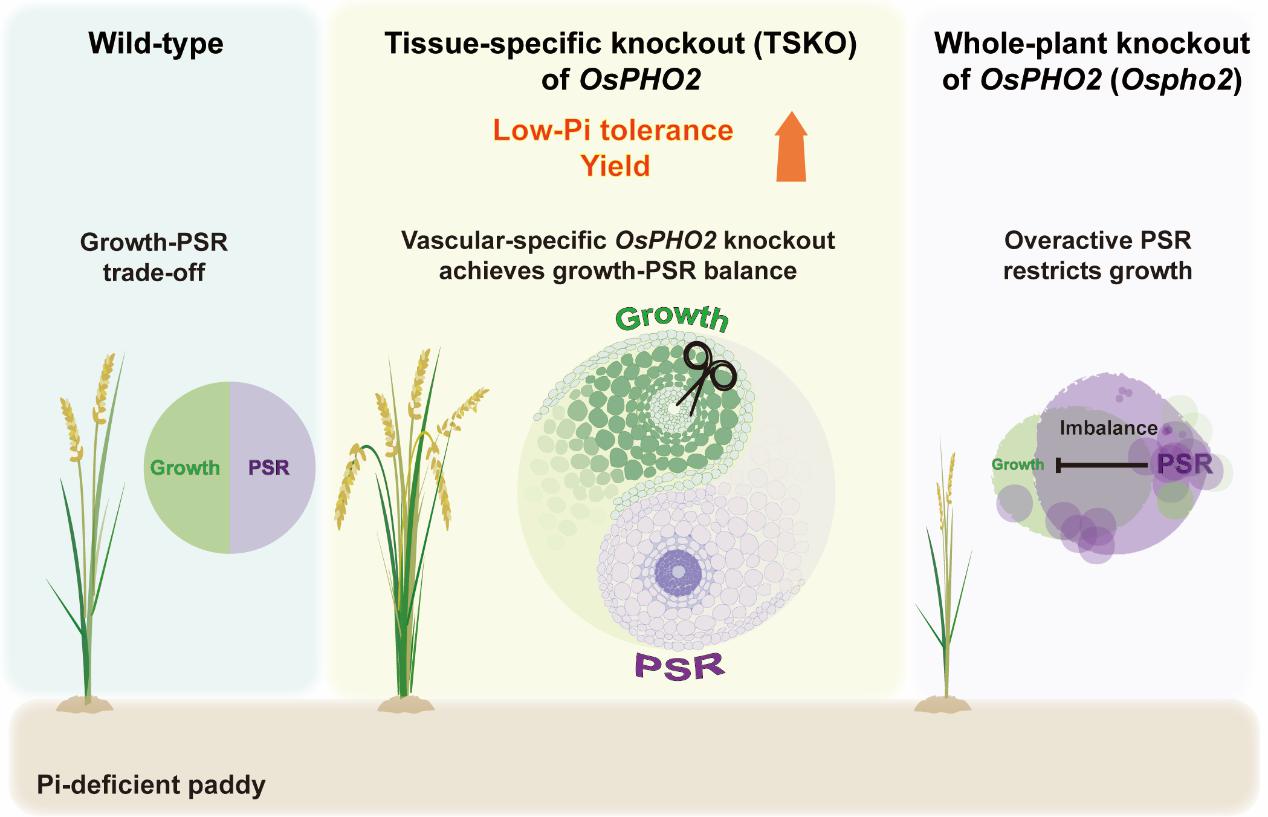
Fig1.Improving Low Phosphorus Tolerance and Yield of Rice via Vascular Tissue-Specific Gene Knockout Technology