
Title: AI-Physics-Experiment Trinity for Integrated Protein Dynamics Modeling
Chen Shi, Minying Low, Peng Xiu, Kresten Lindorff-Larsen, Yong Wang
Abstract
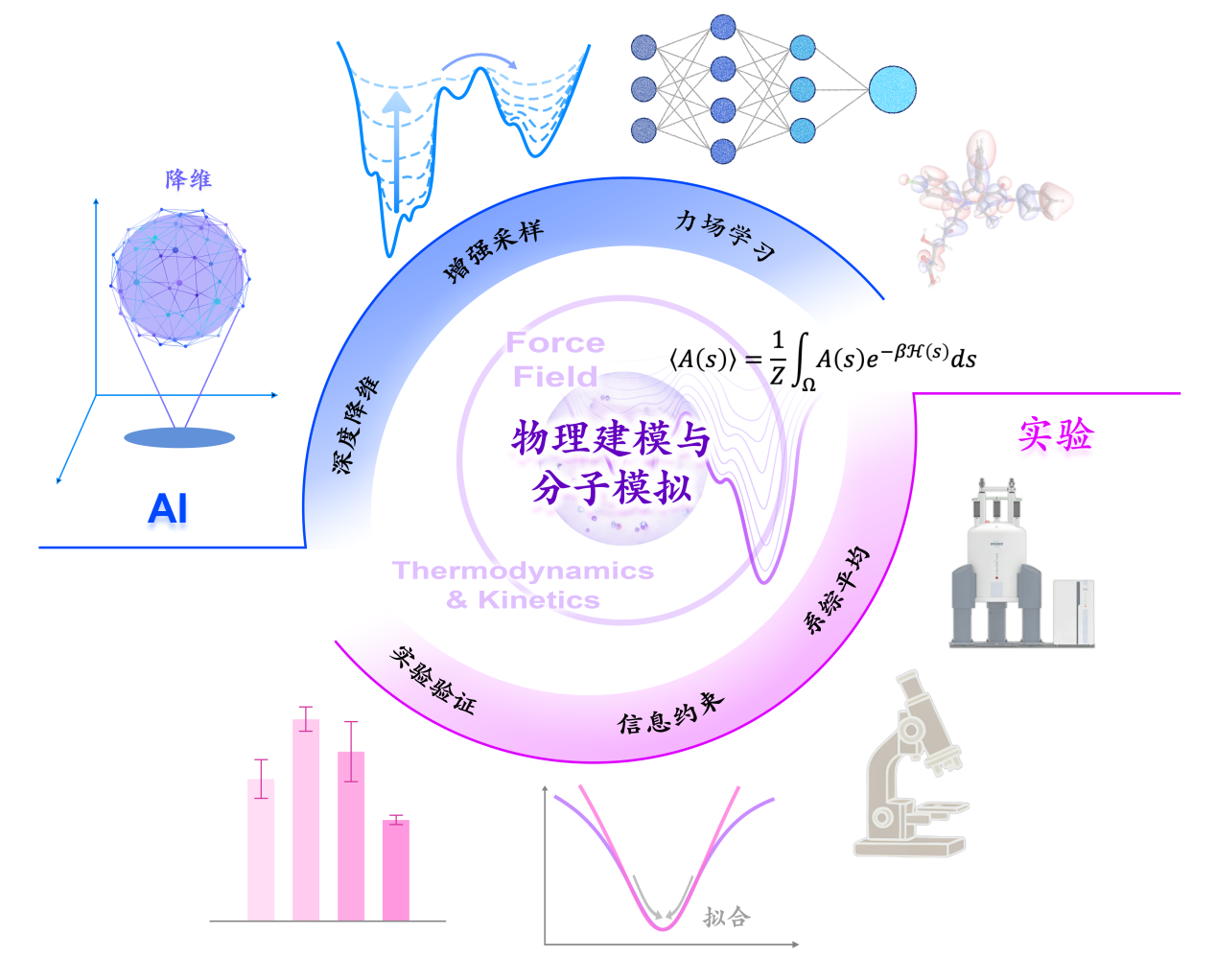
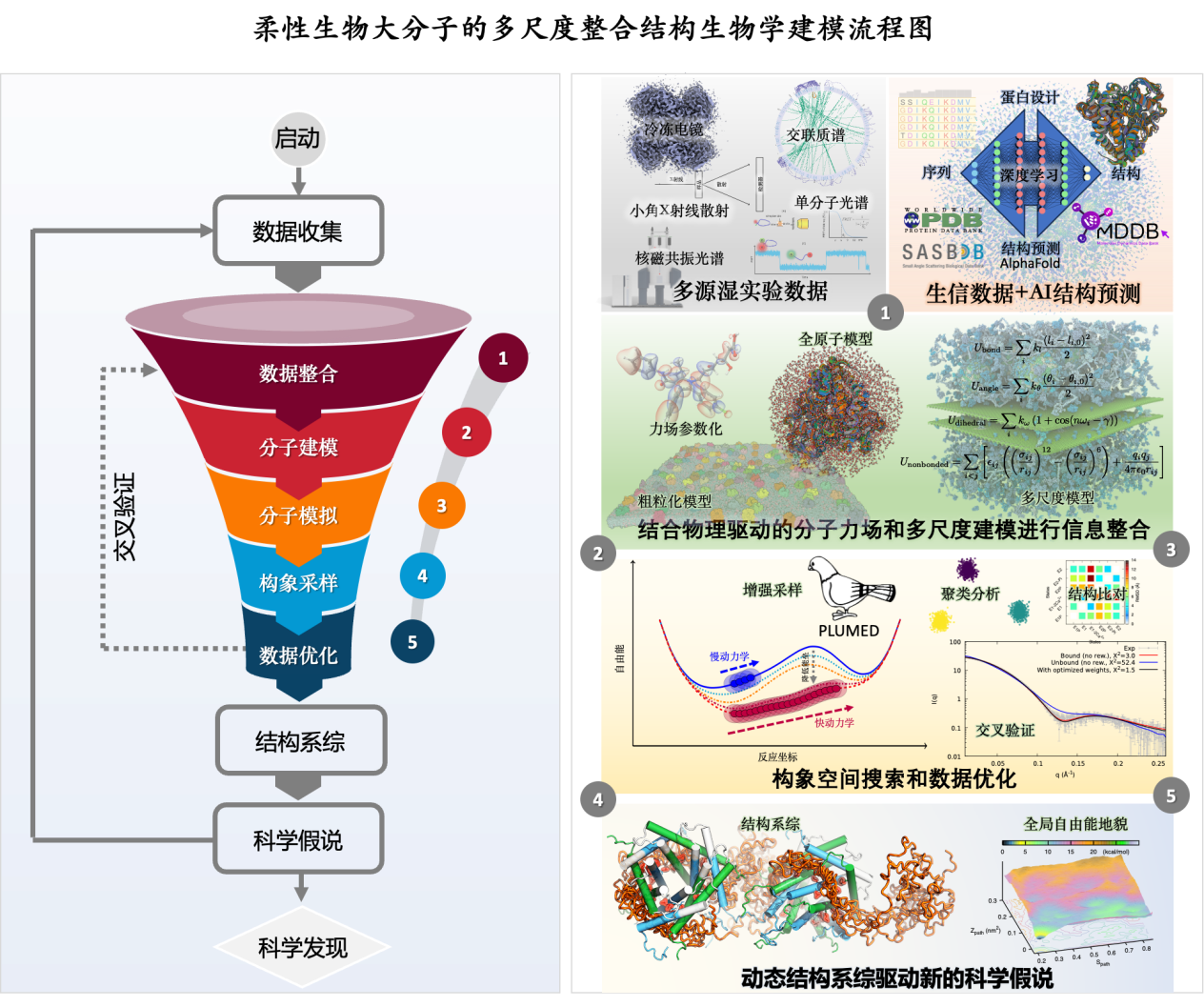
Proteins exist as conformational ensembles, with dynamic transitions governing biological processes. Deciphering these dynamics demands integrating experimental data, physics‐based simulations, and artificial intelligence (AI)—each with distinct strengths and limitations. Experiments deliver direct structural and dynamic benchmarks but are often constrained by insufficient spatiotemporal resolution or difficulties with providing information on transiently and weakly populated states. Physics‐based methods may generate atomic‐scale trajectories via force fields yet face sampling bottlenecks, force field sensitivity, and the curse of dimensionality. AI, particularly deep learning and generative modeling approaches, facilitates the efficient prediction of protein structures and conformational ensembles, as well as dimensionality reduction, yet is hindered by limited interpretability and transferability, and a scarcity of high‐quality ground‐truth data for training and benchmarking models of dynamics. This review outlines core principles of standalone approaches and highlights integrative strategies: experimental constraints guide physics‐driven refinement; AI enhances experimental processing and ensemble generation; physics imparts plausibility to AI, while AI accelerates simulation sampling and force field optimization. We elaborate on this synergy, emphasizing physics‐based modeling's glue‐like role in reconciling heterogeneous datasets. Finally, we summarize persistent challenges and discuss future directions for integrated modeling of protein dynamics.
Link:https://advanced.onlinelibrary.wiley.com/doi/10.1002/advs.76023